The art form
Cholita wrestling explained
Where cholita wrestling came from, how a bout is staged, why the women fight in polleras and what the show means in Bolivia, from published reporting.
Reserve a seat at the ring ↗Quick answer
Cholita wrestling is staged lucha libre performed by Indigenous Bolivian women in the layered skirt of the pollera. It began in El Alto in the early 2000s, and accounts of how it started differ. The bouts are choreographed, with a clean-fighting técnica against a rule-breaking ruda, but the falls are real work. It is modern entertainment with deep roots in the history of the pollera, not an ancient ritual.
What you are watching
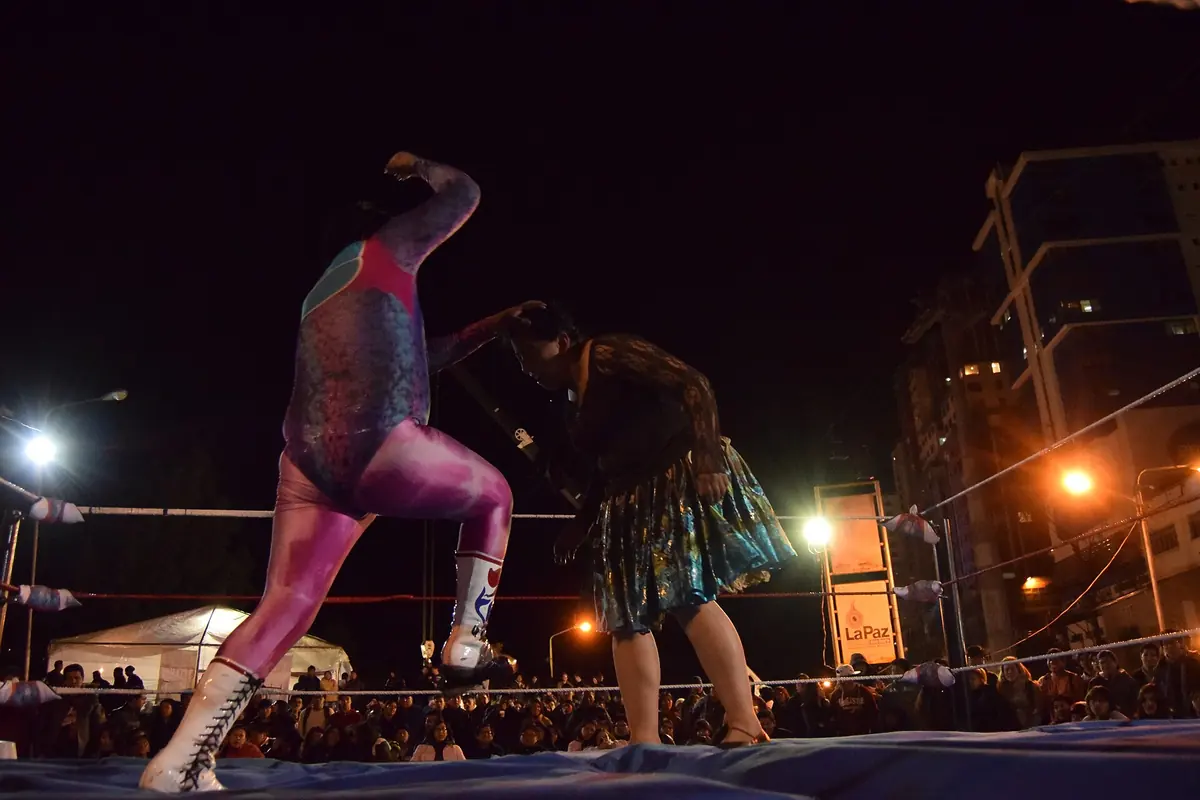
Cholita wrestling is a staged show in the lucha libre tradition. The bouts are choreographed, with written characters and pre-set results, yet the throws and falls are physical work that can injure the wrestlers. Usually a clean-fighting técnica meets a rule-breaking ruda, a referee looks away at the wrong moment, and the crowd shouts for its favourite. What sets it apart is the dress. The women wrestle in the pollera, the layered skirt of Andean women, instead of the spandex and masks of Mexican lucha libre. It is theatre, sport and a statement about identity at once, performed within arm's reach of the audience, in a hall that is usually full of noise, popcorn and opinions about who deserves to win.
Where lucha libre came from
Lucha libre is the Mexican style of professional wrestling. It reached Mexico in the early 20th century and grew into a form of its own, with masks, quick holds and aerial moves. Masked wrestlers appeared around the 1920s and became widespread in the 1930s, and in Mexico the mask is treated as something close to sacred. The style spread across Latin America in the mid-20th century, and by the 1960s Bolivia had several lucha libre organisations, among them Titanes del Ring, the Titans of the Ring. Those men's leagues are the world the cholitas stepped into, and the good-against-bad format they borrowed. Mexico's own lucha libre was declared an intangible cultural heritage of Mexico City in 2018, which gives a sense of how much the style matters in the region.
How the women entered the ring
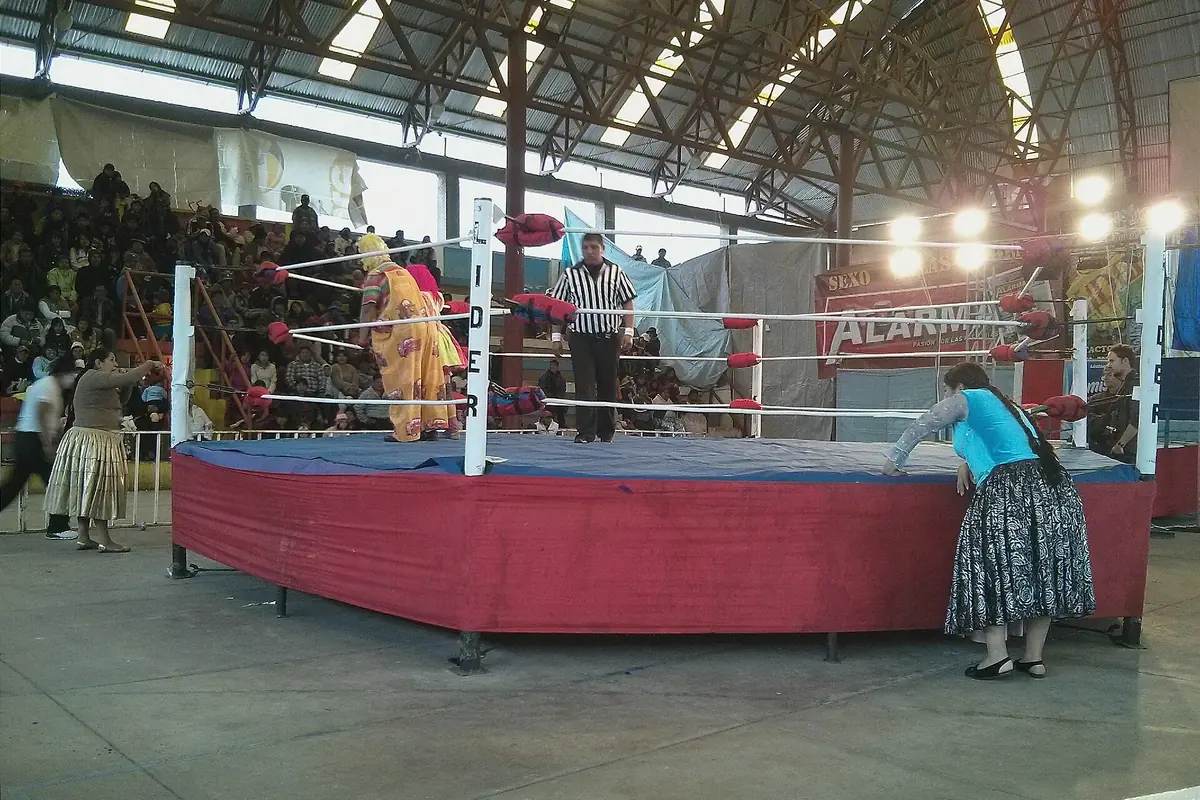
Women arrived in the early 2000s, and the sources do not agree on how. One reporter dates it to 2001, when attendance was falling and Juan Mamani, president of the Titans and a wrestler himself, looked for new ways to win fans back. An open audition drew dozens of women, and the Aymara women who took part drew more fans. Another account says the idea grew from a small circle of women who used wrestling to relieve stress and rebuild confidence after domestic violence, and that a promoter saw its commercial potential. Both stories end in the same place: women in the ring in El Alto, wearing polleras, in front of a paying crowd that had not seen anything like it before.
From a promoter's idea to their own association
Early on, the women were part of a league run by men. Reporters describe the idea as a marketing move, and one writer in 2012 argued that the first pitch showed little respect for the women involved. That is a fair reading to keep in mind. Over time the cholitas formed their own independent association and now organise their own fights, according to a 2017 account. The show you can book today is the product of that shift, a project the wrestlers run, not only a spectacle organised around them. Several agencies now sell visits, and one 2012 report says events were by then also held across La Paz, so the show is no longer confined to one hall.
The pollera in the ring
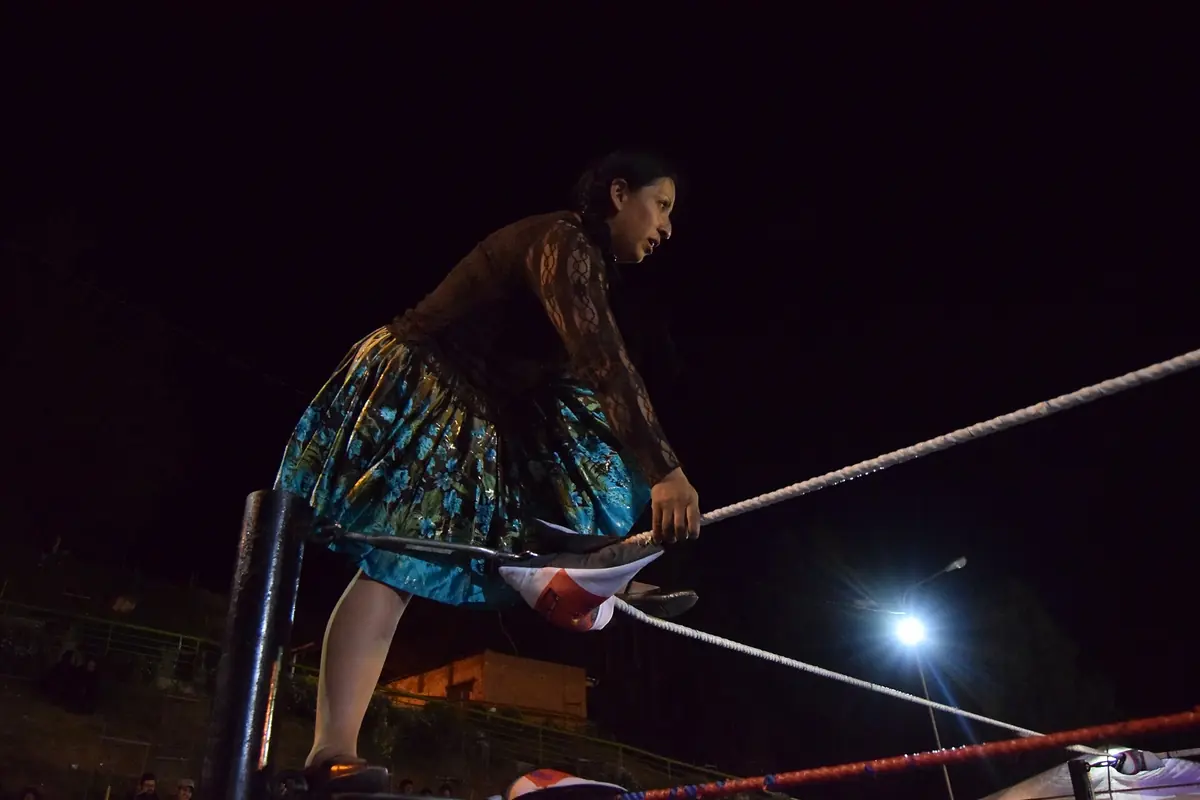
In the ring the cholitas wear what they wear in the street: a layered pollera skirt over petticoats, a shawl, braids and a bowler hat. Reporters who have covered the show describe this as a statement that women need not give up their identity to compete. Cholitas call themselves women of the pollera, mujeres de la pollera. Before a bout, the performers are described removing their hats, shawls and jewellery, so what you see in the ring is the skirt, the blouse and the braids. Where American women wrestlers wear spandex, the cholitas keep to the street clothes of Andean women. The dress is theirs, not a costume, and a fuller skirt is generally considered better, since it is thought to signal health.
Read next: Who are the cholitas?
Anatomy of a bout
A bout starts with an entrance. Accounts describe the wrestlers dancing to Andean music and making a showy walk to the ring, after which the hall goes quiet. Then comes the contest between good and bad. The técnica is polite, follows the rules and wins with technical moves. The ruda breaks the rules while the referee looks away. The técnica usually wins, and the crowd goes home satisfied. Holds such as headlocks, hair-pulling, punches and kicks appear, alongside acrobatics and somersaults. Humour is part of it, and so is the crowd, who cheer, boo and sometimes get chased through the seats.
The crowd is half the show
The audience is part of the performance. Crowds take sides in the contest between good and bad, cheer a favourite and boo the ruda, and the wrestlers play to them, staring down a heckler or chasing a rival through the seats. Reporters describe a hall that feels like a school gymnasium, with fans a few feet from the ring, families and tourists mixed with local regulars. The shows began in El Alto, where many spectators are Indigenous and working people, and they work as cheap, loud entertainment first. Join in, and the bouts make more sense.
Who the wrestlers are
The wrestlers are Indigenous Bolivian women, and the programme usually mixes cholita bouts with men's matches and mixed fights. Many have other work alongside the ring, such as selling in the street, and many look after families. Ring names tell you which side a wrestler is on: 'la Cariñosa' is the affectionate one and 'la Mala' the bad one. Reporters describe wrestlers who fight as técnicas and others who play the villain, and the roles take real athletic skill. One profile records a headliner who describes herself as technical, not rough, and who says she is proud to be a Bolivian woman.
Why it means more than a show
The pollera carries history. Before the 1952 revolution Indigenous people in Bolivia could not vote or own land and were barred from the central square of La Paz. Cholas were discriminated against for decades after, and the words chola and cholita were used as slurs. After Evo Morales took office in 2006, and with the 2010 law against racism, the picture changed. Some Bolivians see the wrestlers as a sign of that change, and a vice minister told one US radio programme they show a different image of Bolivia. Others see an entertainment product that pays little. Both readings are common, and neither cancels the other.
A word to use with care
Chola and cholita were historically racial slurs. In Bolivia many women of the pollera have reclaimed them, and in October 2013 the city of La Paz declared the chola paceña part of its intangible cultural heritage. In other countries, Peru among them, the words still mostly read as pejorative, and even in Bolivia the diminutive can sound belittling in the wrong mouth. Visitors can follow the show's own usage, cholita luchadora, and listen to how the women describe themselves. Do not use the word for a woman who has not chosen it, and do not treat a pollera as fancy dress.
Who this isn't for
If you want a real sporting contest, this is not one, because the results are scripted. If you are looking for an ancient Aymara ritual, you will not find one either. The show is about two decades old and borrows its form from Mexican lucha libre, although the dress carries centuries of history. If staged violence, loud crowds and a cold hall at altitude sound unpleasant, a quieter evening in La Paz may suit you better. And if you plan to treat the wrestlers as a curiosity, the show will not reward you. They are professionals doing a hard job in front of a crowd, and the best way to watch is to join the crowd.
Frequently asked questions
Is cholita wrestling real or staged?
Both. The results are choreographed and the characters are written, as in lucha libre. The falls, holds and acrobatics are real physical work, and wrestlers can be hurt, sometimes badly.
When did cholita wrestling begin?
In the early 2000s in El Alto. Accounts differ on how it began. One dates it to 2001 and a promoter's search for new audiences, another to a support circle for women who had suffered domestic violence.
Why do the cholitas wrestle in skirts?
The pollera is their everyday dress and a mark of identity. Reporters describe wrestling in it as a statement that women need not give up who they are to compete with men.
Do men wrestle too?
Yes. The programme normally opens with men's matches, and there are mixed bouts between men and cholitas. The cholitas take centre stage afterwards.
Is it an Aymara tradition?
Not in itself. The form is lucha libre, a Mexican style, and the show is about two decades old. The pollera and the women's identity carry a much longer Andean history.
Where can I watch it?
In El Alto, the city above La Paz, and the venue varies. Booking an organised evening from central La Paz is the simplest route, because transport is included.
Sources